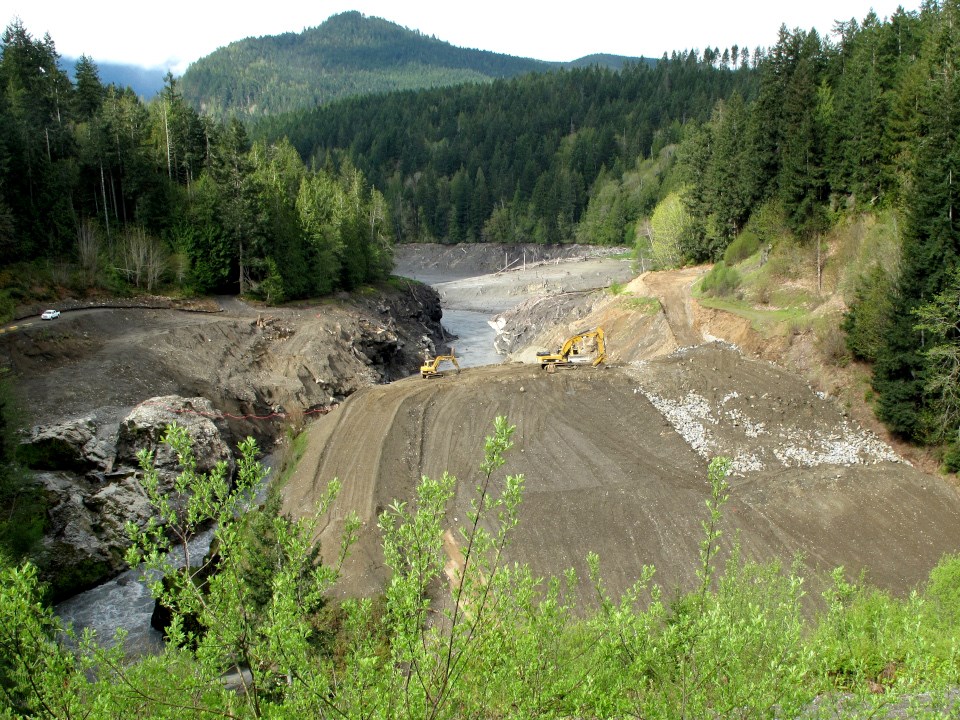
The river responded quickly, but recovery did not happen all at once. Some changes were visible from the air, some appeared in fish genetics and monitoring data, and some could only be measured by what the Lower Elwha Klallam people were finally able to do again.
Ecological recovery
Fish returned, and the landscape moved with them
Salmon and steelhead began using newly accessible habitat soon after barriers came down. NOAA now documents increased adult abundance, wider habitat use, naturally produced juveniles, and the re-emergence of a summer steelhead life history that had seemed lost. Pacific lamprey are also increasing. Those gains matter, but Chinook productivity still remains below recovery targets. 11
Sediment produced another dramatic change. USGS measurements estimate that about twenty million tons moved out of the reservoirs, reshaping channels, estuaries, beaches, and the river mouth. Before removal, the dams had starved the coast of sand and gravel. Afterward, new bars and a larger delta appeared where the Elwha meets the Strait of Juan de Fuca. 9
The exposed reservoir beds also became a restoration site of their own. The Lower Elwha Klallam Tribe reports that roughly 450,000 rooted native trees and shrubs and 7,100 pounds of local seed have been planted. More than one hundred engineered logjams now help create pools, side channels, and shelter for young fish. 10
Cultural recovery
A fishery is more than a population count
For the Lower Elwha Klallam Tribe, the return of salmon is tied to treaty rights, food, ceremony, teaching, and identity. In October 2023, Tribal fishers held the first post-dam-removal ceremonial and subsistence coho fishery, harvesting 177 fish from the lower river. A second limited fishery followed in fall 2024. That moment connected ecological recovery to a practice the dams had interrupted for more than a century. 12
The Tribe is not simply receiving the results of restoration. Its natural resources department monitors adult returns, juvenile outmigration, spawning distribution, water quality, habitat, and the estuary. The work reflects a shift from being treated as the community harmed by federal and private decisions to serving as a sovereign co-manager of the river's future. 10
There are still tensions. Vehicle access into the upper Elwha Valley remains closed beyond Madison Falls because repeated washouts followed the return of natural river movement. The water facilities built for removal also generated years of operational disputes. Restoration solved the barrier problem, but it did not freeze the river into a new permanent shape. 13
Timeline
A river reconnects
Salmon and steelhead moved into habitat above the former dam sites as removal progressed.
The coast grows
Released sand and gravel expanded the river mouth and began rebuilding sediment-starved beaches. 9
A treaty fishery returns
The Tribe held its first post-removal ceremonial and subsistence coho fishery and harvested 177 fish. 12
Restoration continues
The Tribe and partners added engineered logjams to restore cooler pools and complex habitat in the lower river. 10
Monitoring, not a finish line
Chinook and steelhead are improving, but self-sustaining populations at historic abundance will take decades. 11
The recovery revealed that a river can respond with surprising speed once its connections are restored. It also revealed something less tidy: repair is not a reset button. It is a long relationship among a moving river, recovering species, sovereign rights, and communities still adapting to change.