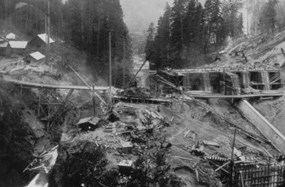
The dams were sold as progress: electric power for mills, homes, and a growing city. That story is true, but it is only half of the history. The same structures that helped build modern Port Angeles also blocked a river that had sustained the Lower Elwha Klallam people since time immemorial.
The promise
Powering an industrial city
When Thomas Aldwell arrived in Port Angeles in 1890, he saw the Elwha's current as a source of power and profit. With outside financing, he began the Elwha Dam in 1910. The electricity helped mills expand and gave the isolated northern Olympic Peninsula an energy source at a time when power was scarce. Demand kept growing, so a second project at Glines Canyon followed. 5
The two dams were different in size, but they shared the same basic design decision: neither gave migrating fish a way upstream. Washington had required fish passage on dams since 1890, yet the requirement was ignored. A replacement hatchery opened below the lower dam in 1915 and closed only seven years later. By then the physical barrier was permanent.
The cost
The river was not empty land
Before the dams, all five Pacific salmon species moved through the Elwha watershed. Salmon were food, trade, ceremony, and a foundation of Lower Elwha Klallam life. Blocking the lower river cut fish off from more than seventy miles of main-stem and tributary habitat. Runs that once numbered in the hundreds of thousands fell to only a few thousand returning fish. 1 10
The reservoirs also flooded homelands and cultural sites, including the Tribe's creation site. The harm was not an accidental side effect outside the project's history. It was part of how Port Angeles received cheap power. The 1855 treaty had preserved the Tribe's right to fish at its usual and accustomed places, but a legal right to harvest fish meant little when infrastructure prevented those fish from returning. 2 4
This is where the meaning of "progress" splits in two. For the city, the dams represented industrial growth. For the people whose name and identity were tied to the Elwha, they represented dispossession and a century-long break in ecological and cultural relationships. Any honest history has to keep both experiences in view at the same time.
Timeline
A treaty promise
The Treaty of Point No Point reserved fishing rights for the S'Klallam and other signatory tribes. 4
Construction begins
Thomas Aldwell and his investors began building the lower dam about five miles from the river mouth.
The foundation fails
The river undercut the dam's unsecured base. The failure was repaired with fill rather than a new bedrock foundation.
Elwha Dam operates
Power began flowing to Port Angeles industry. No functioning fish passage existed.
A second barrier
Glines Canyon Dam was built eight miles upstream and became operational in 1927. 5
The dams were not simply aging machines that later became inconvenient. They created a lasting political question: when one community's prosperity depends on another community absorbing the damage, who gets to decide when the arrangement must change?