Deciding to remove the dams was only the beginning. Nearly a century of sand, gravel, and silt sat behind them. The project had to reconnect the river without turning that stored landscape into one uncontrolled downstream disaster.
The sediment problem
The dams had stored a century of river movement
By 2011, about 21 million cubic meters of sediment had accumulated in Lake Aldwell and Lake Mills. More than half was sand-sized or larger. If the dams had vanished in a single blast, a huge pulse could have buried habitat, overwhelmed water systems, and left unstable cliffs of reservoir sediment. 3
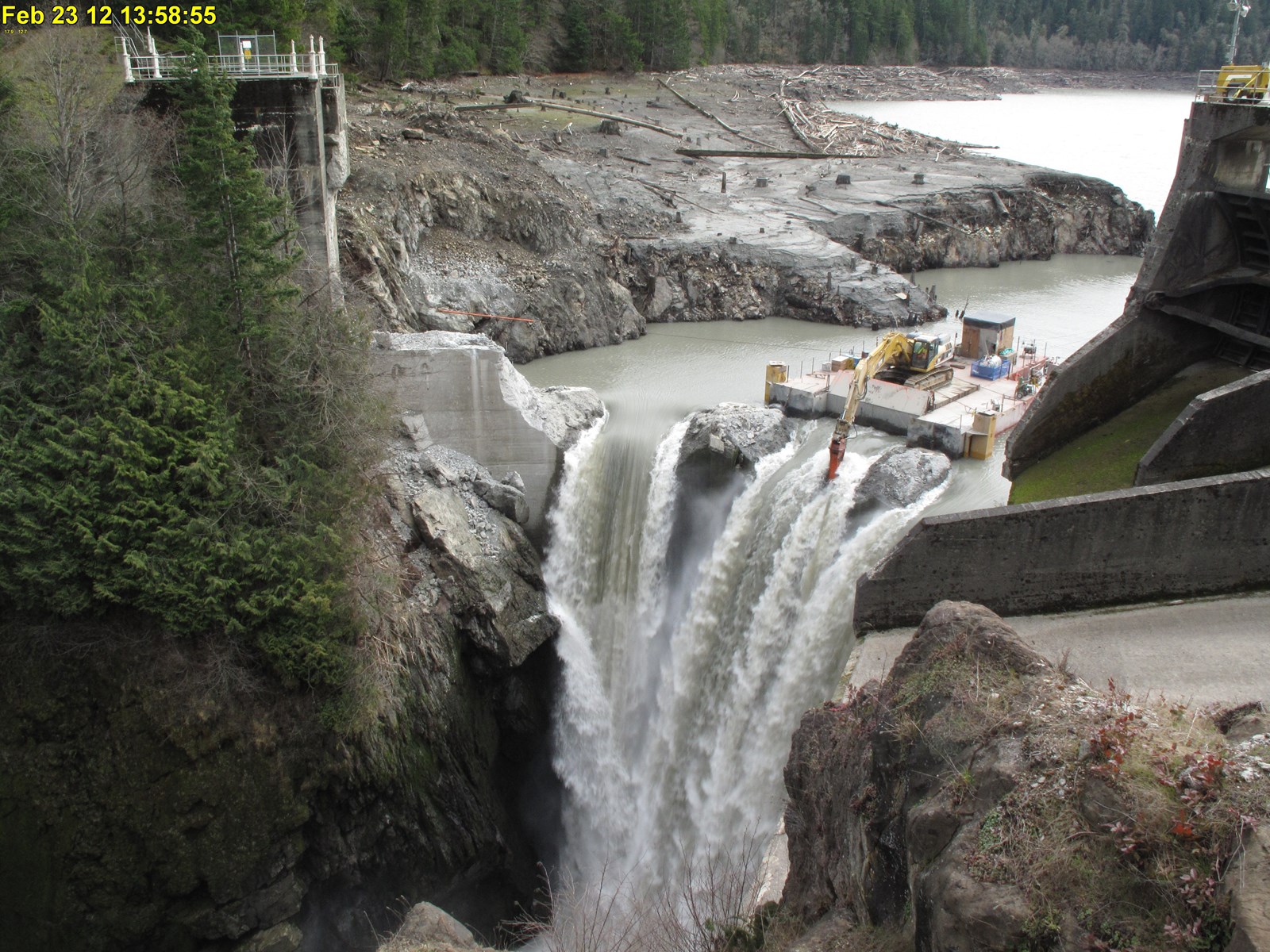
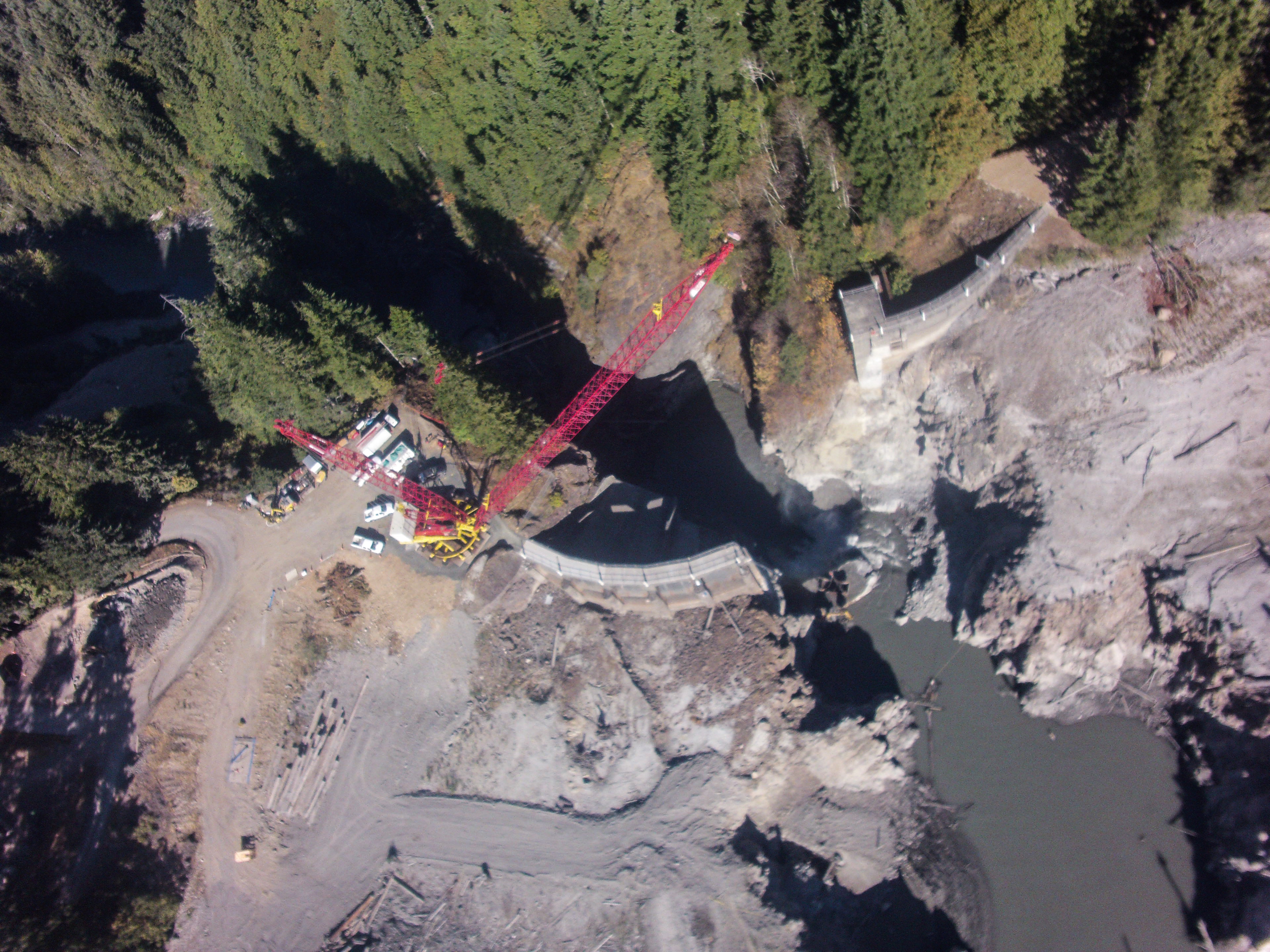
The solution was staged drawdown, often described as "notch and hold." At the 210-foot Glines Canyon Dam, crews removed the top seventeen feet with hydraulic hammers, then cut 173 feet through alternating notches. Each new opening lowered Lake Mills and let the river erode another portion of the exposed delta. During holds, crews watched how much material moved and where it settled. 8
The smaller Elwha Dam required a different method. Crews lowered Lake Aldwell, dug a temporary diversion channel through the left spillway, and used cofferdams to route the river away from the main structure. That made it possible to excavate the fill and concrete under relatively dry conditions before returning the river to its original channel.
Protecting people and water
The expensive work happened before demolition
Port Angeles, an industrial mill, state fish facilities, and the Tribe's hatchery all depended on lower-river water. Sediment released during removal would make that water extremely turbid. Two treatment plants, a new fish-friendly intake, flood protection, and road improvements had to be ready first. Construction ran from February 2008 to April 2010 and cost $79 million. 8
The lower Elwha Dam was fully removed by spring 2012. Work at Glines Canyon continued through holds, blasting, and mechanical cutting until the last thirty feet came out in August 2014. Across the whole project, the actual breaking of concrete was only one part of the job. Water systems, hatchery protection, sediment science, revegetation, and long-term monitoring made removal possible.
That is the larger engineering lesson: safely un-building infrastructure means designing for everything the structure has changed around it. The dams were connected to drinking water, industry, fish, roads, reservoirs, and a century of stored sediment. None of those relationships disappeared just because removal had been approved.
The method
Draw down the reservoir
Crews lowered water to expose a section of dam and let the river begin cutting into the reservoir delta.
Open a controlled path
At Glines Canyon, alternating notches became temporary spillways that lowered the reservoir in steps.
Pause for the river
Work stopped during planned windows so sediment could move and fish impacts could be limited.
Read the response
Turbidity, flow, reservoir erosion, and downstream deposits were monitored continuously.
The project worked because it treated the river as an active system instead of a passive construction site. Crews did not command every response. They created controlled openings, watched what the river did, and adjusted.